Posts

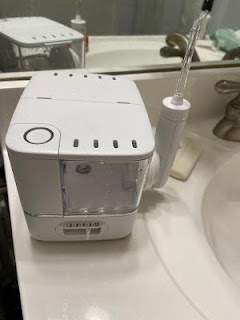
Does Waterpik have a model that doesn't need to be plugged to operate?
Image
I  believe that using a Waterpik as an adjunct to brushing and flossing can help my patients keep their gums healthier. I have already covered the reasons in earlier posts but suffice to say it facilitates fluid exchange of sulcular fluid around the roots of the teeth and can cut down on gingival inflammation.  Many of my patients, who live in apartments with relatively small bathrooms, complain that they don't want to use a waterpik in their bathroom because it needs to be plugged in. They have often commented that they would be more likely to use a smaller battery operated model. The problem is that most of the battery operated models are much less powerful and probably less effective. When I went to the Greater New York Dental Convention at the end of November I stopped by the Waterpik booth and asked them what they had that was new and they showed me a battery operated model called the Ion Professional. It is smaller than their standard plugged in models and it has a ...

NYC has mandated COVID Vaccinations for all people working in person in the city?

As of December 6 th Mayor de Blasio announced that  all private-sector workers must provide proof of vaccination to their employers, and all employers must keep a record of each worker's proof.  In addition employer's must: - Post an official sign-in document in an obvious spot. After December 27th employees must show proof of their Covid vaccination to work in-person. This mandate applies to dental offices and their staff as well and Dentists must comply or face fines from the city. At this point it is hard to believe that some dental staff have not been vaccinated and the vast majority of our workers have been. That being the case, it is time for the last hold outs to get their vaccine or get furloughed without pay.  Of course this minority has the option of seeking a job outside of NYC, but I can't think of a good reason not to get vaccinated. I have heard most of the arguments against vaccination, but none of them are convincing and clearly going unvaccinated expos...

How is David doing?

Image
 My son is approaching graduation from NYU  College of Dentistry this spring. Today he had an interview for a possible general practice residency. When he was done he called me on my cell phone to ask if we should have lunch together at my office. I said yes, of course , and went back to my patient who was listening to our conversation. Lately I have been listening to a playlist from my iPhone and my sons call was broadcast to the Tivoli radio that I use to amplify my music (embarrassing!) David and I got take out food from a Potbelly and ate lunch together in my office. Currently he is planning on joining my practice after finishing his general practice residency. Since he is using the matching program that most of the dental students use, he will not know where he will be doing his residency until match day which is in January sometime.  New York State requires that newly minted dentists either take part in a residency or practice in another state for a couple of y...

How and why a cast post is made?

 Usually cast posts are indicated for some anterior teeth after a root canal treatment,  especially if when these teeth are prepped for crowns the preparations leave minimal tooth structure. Since cast posts are made of metal they can be thinned as much as is needed, without weakening the core portion.  Another reason. that they are used is they can be fit to rather large oval root canal preparations that do not easily adapt to prefabricated round posts.  Cast posts are more expensive because they involve a laboratory fee and take two visits , while prefabricated post and cores can be completed in one visit and an impression for a crown can also be completed at this visit as well ( assuming that a long enough appointment is scheduled.  In my practice, I usually opt for a prefabricated post and core , assuming that it can be used without compromising the final result.  That being said, there are times when only a cast post will work  and I am forced t...

Some things change but some things stay the same?

Dentistry is constantly evolving and an excellent dental practitioner has to be committed to life long learning.  I maintain a perfect five star rating on Google, teach at NYU College of Dentistry and really enjoy treating my patients. I continue to actively participate in over 100 hours of continuing education each year and I am a leader of a Spear Study Club that meets almost every month.   The writing on the wall clearly shows that our profession is transitioning away from making our patients porcelain fused to metal crowns as  practitioners are making a greater portion of their crowns all ceramic ( mostly either lithium disilicate or zirconium crowns).  I have become adept at utilizing these newer style restorations and am enjoying teaching the newer techniques to fourth year dental students at NYUCD.  Keeping up to date is an important part of producing predictably excellent results for our patients and during my lengthy career I have witnessed ...

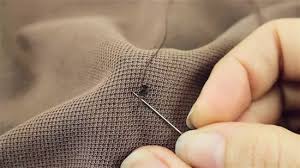
A Stich in Time Saves Nine?

Image
We all are familiar with this cliche about the importance of early detection. Unfortunately because of their  COVID 19 concerns,  more people are delaying their recare dental visits, often waiting to schedule an appointment only when they notice a new dental symptom. Their choice may be  putting them at greater risk for infections and  the need for more extensive treatments.  In addition, many of the businesses that are located in Manhattan (my neighborhood) have not yet had their employees return to their offices for work full time.  Many of  my patients, who come in for  their checkup and cleanings,  are traveling from home which may require longer travel times to get to our office. Even if they are coming in to their offices part time, they may be loathe to take time off to visit us if cuts into their in person office hours. Not surprisingly when they do come in, my examinations are detecting more problems at more advanced stages ...

Why Zirconium crowns are replacing Porcelain fused to metal crowns?

Why are monolithic Zironium crowns becoming the most popular type of crown for posterior restorations? Probably because they exhibit of a number of obvious advantages . These include the fact that cadcam zirconium crowns have more affordable lab fees, are more resistant to fracture, require less tooth preparation and more biocompatible than porcelains or the metals used in most dental restorations.  While earlier versions of full contoured zirconium crowns were often too opaque and less esthetic than a well made porcelain fused to metal crown, newer versions are more translucent and are esthetic enough to satisfy most patients who need posterior crowns. In addition, when their margins are supragingival, no grey collar is visible as often is the case with ceramometal restorations. Their margins can be placed either supra or sub gingival and unlike lithium disilicate restorations they can be cemented with resin modified glass ionomer or traditional dental cements without  sacri...